
Quick Answer — Usually excluded: Standard renters policies typically exclude damage caused by insects and vermin, so treatment costs and infested belongings are often not covered. Whether anything is paid depends on your policy wording, any endorsements (optional add-ons that change what a policy covers), and sometimes your lease and state.
The bites showed up first, then the tiny dark spots along the mattress seam. Now you’re searching to find out whether renters insurance covers bed bugs, and the short answer is that it usually doesn’t, though a few details could change that for you. Below, you’ll see why insurers treat infestations differently from a fire or a theft, what that means for your belongings, who typically pays for treatment, and how to protect yourself if you decide to ask your insurer.
Does Renters Insurance Cover Bed Bug Treatment?
Typically, no. A renters policy is insurance that covers your belongings, your liability to other people, and some extra living costs after a covered loss, and it’s built mostly around sudden and accidental events. “Sudden and accidental” means something abrupt and unexpected, like a kitchen fire or a break-in, whereas insurers tend to view an infestation as something that develops over time.
Many policies also contain an exclusion for damage caused by insects, vermin or pests. An exclusion is a cause of loss the policy specifically says it won’t pay for, and the cost of hiring an exterminator is commonly treated as pest control rather than repair of covered damage. Some policies may include limited pest-related coverage or offer it as an optional add-on, but that’s the exception, so your own wording is what matters.
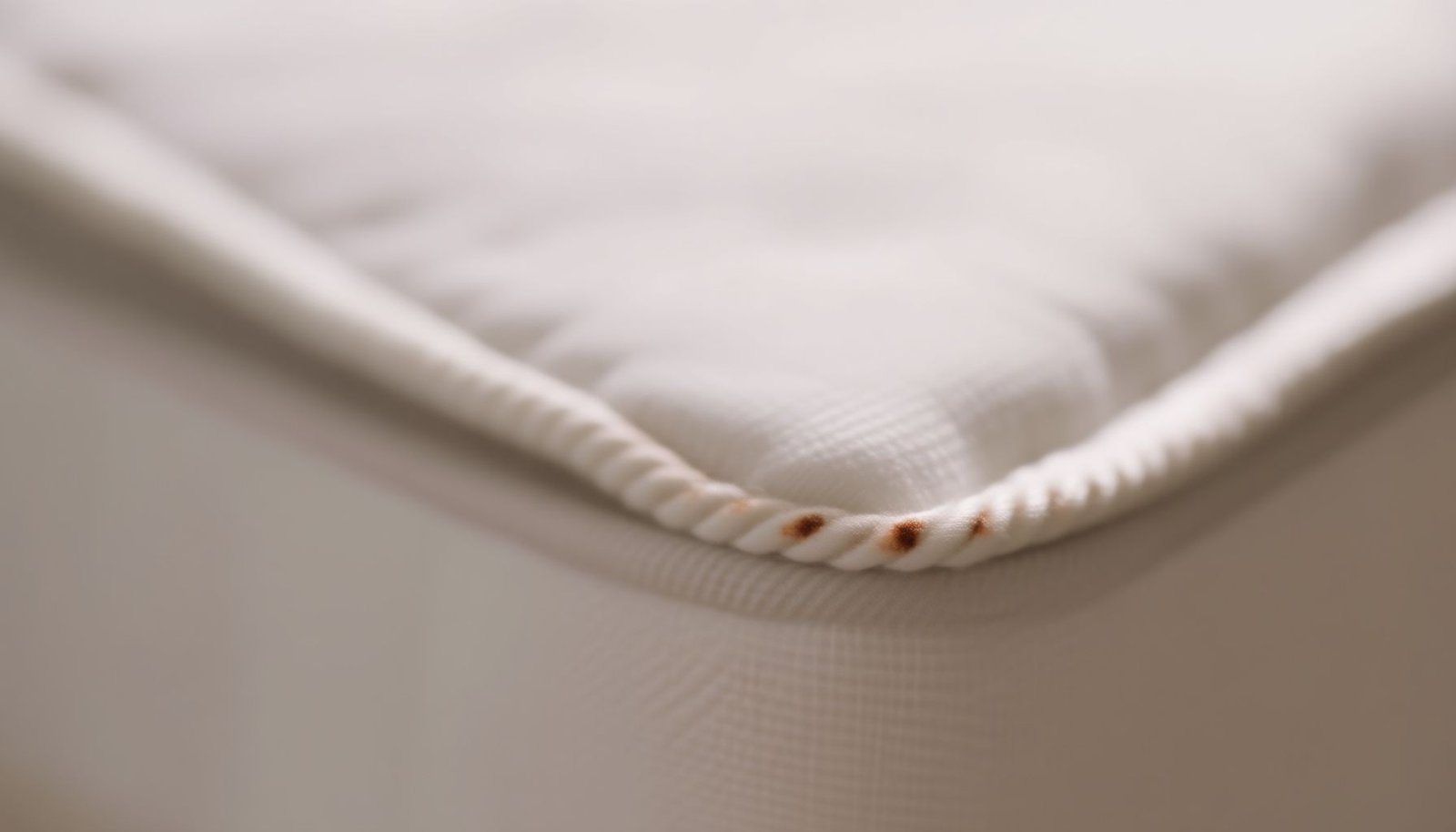
This close-up detail image is a reminder of how small the early signs of an infestation can be.
Will Renters Insurance Pay for a Ruined Mattress or Furniture?
Policies generally come in two styles: “named perils” policies cover only a listed set of causes, while “open perils” policies (sometimes called special form) cover most causes unless the policy excludes them. Bed bugs usually aren’t on a named-perils list, and under open perils the insect or vermin exclusion typically applies.
Even when a policy treats an item as covered, practical limits can shrink or erase a payout. Your deductible, which is the amount you pay before the insurer pays anything, may be larger than the value of the items you’d claim. This all depends on your wording, limits and endorsements, and here are the reasons claims like this are commonly denied or limited:
- Insect or vermin exclusion: the policy lists damage from pests among the causes it won’t pay for.
- Gradual rather than sudden: the insurer may view an infestation as something that built up over time, not a single accidental event.
- Treatment seen as upkeep: extermination is often classed as maintenance or pest control, not repair of covered damage.
- A high deductible: the value of the damaged items may fall below what you’d have to pay out of pocket first.
- Depreciation and category limits: if a policy pays actual cash value (replacement cost minus wear) or caps certain categories, the payout may be smaller than the cost of replacing things.
- Thin records: items thrown out without photos or receipts are hard to prove you owned.
Is Your Landlord Responsible for Bed Bug Treatment?
Sometimes, but it varies. Responsibility often depends on your lease, local rules, and sometimes on where the infestation started, which can be hard to prove. Your renters policy doesn’t cover the building itself, since that’s typically the landlord’s insurance, and a landlord’s policy may have its own pest exclusions.
Homeowners policies, which typically cover the structure, other structures on the property, belongings, liability and loss of use, tend to exclude pests in a similar way. Owners often pay for treatment themselves, which is one reason it helps to understand the whole cost picture, as we do in How Much Is Homeowners Insurance? (Typical Costs by Home Value). For renters, there’s one more wrinkle: if a neighbor says the bugs came from your unit, the liability section of your policy (which responds when you’re legally responsible for injury to others or damage to their property) may be asked to respond, though pest exclusions and the facts of the situation affect the outcome.
| Situation | Typically covered? | What to check in your policy |
|---|---|---|
| You pay an exterminator for your own unit | Typically not covered | Pest, insect and vermin exclusions, plus what your lease says about who handles pest control. |
| Your landlord treats the whole building | Not a matter for your renters policy, which typically doesn’t cover the building | Lease language on pests, any local rules, and your written communication with the landlord. |
| A neighbor says bugs spread from your unit | Unclear; depends on the facts and the wording | The liability section and its exclusions, and a call to your insurer before you respond to the claim. |
Does Loss of Use Cover a Hotel Stay During Bed Bug Treatment?
Loss of use, also called additional living expenses, typically helps with extra costs like a hotel when a covered loss makes your home unfit to live in. The key phrase is “covered loss.” Because pests are usually excluded, a hotel stay tied to bed bug treatment is typically not reimbursed, though your wording decides.
Any help with temporary housing may come from elsewhere, depending on your lease and local rules, so it’s worth asking your landlord in writing. A pest professional can also tell you how to avoid carrying bugs with you on luggage or clothing, since a hotel doesn’t automatically solve the problem. Wherever the money comes from, keep your receipts.
What Should You Do If You Find Bed Bugs in Your Rental?
Start with your own safety. If you use any treatment product, follow its label and the guidance of a licensed pest professional rather than improvising. Then work through these steps in order, because the paper trail you build now matters whether or not an insurer ends up involved:
- Take dated photos and write notes about what you find, including the furniture, bedding and areas affected.
- Tell your landlord or property manager in writing, describe what you’ve seen, and keep a copy of the message.
- Ask a licensed pest control professional to inspect, and request a written report or invoice for your records.
- Before you discard anything, photograph it and add it to a list, and ask the pest professional how to handle each item.
- Read the exclusions, deductible and endorsements in your renters policy, then ask your insurer or agent how the policy treats pests, sharing the facts honestly.
- Keep every receipt, message and letter together in one folder so you can find them later.
Asking your insurer a question isn’t the same as filing a claim, but practices vary, so ask how they’d treat your call. If reading your policy leaves you wanting different coverage, our guide on how to change or switch homeowners insurance covers the general process, and some of the same ideas may apply to renters policies, though details vary by insurer.
Pro-Tip: Build a home inventory before anything goes wrong, using photos or a slow video of each room, plus receipts for bigger items when you have them. Store it somewhere outside your home, such as a cloud folder, and update it when you buy something new. Accurate records support a claim, while exaggerating or guessing can undermine one.
When to Talk to Your Insurer, Agent or an Attorney:
- Your landlord says treatment is your responsibility, your lease is unclear, or you’re getting no response. A licensed attorney or a local tenant resource in your state can explain your rights.
- You received a denial letter you disagree with. Ask the insurer to point to the exact policy language it relied on, and consider asking an attorney licensed in your state about your options.
- The infestation keeps spreading or comes back after treatment, and costs are piling up. Tell your insurer and landlord promptly, and ask what notice your policy requires.
- A neighbor or guest says the bugs came from your unit and is asking you to pay. Contact your insurer about the liability section before you agree to anything.
- The pest wording in your policy is confusing. Ask your agent to show you the exact language and to confirm their answer in writing.
Tonight’s small task is to open your policy and find the exclusions section. Look for words like “insects,” “vermin” or “pests,” check whether any endorsement mentions them, and write down your deductible next to what you found. Having that note ready makes any call to your insurer or landlord shorter and clearer.
Frequently Asked Questions
Does renters insurance cover bed bugs?
Typically, no. Many policies exclude damage caused by insects, vermin, or infestations, so bed bugs are often not covered. It depends on your policy and state, so read the exclusions section of your policy or contact your insurer to confirm how they treat bed bugs.
Will renters insurance pay to replace my mattress, clothes, and furniture if they get bed bugs?
Usually not, because damage from pests is often listed as an exclusion in personal property coverage. Some policies may treat things differently, and a few insurers offer optional add-ons, but this depends on your policy and state. Your insurer can tell you whether any of your belongings might qualify.
Who pays for bed bug treatment, the landlord or the tenant?
It often depends on your lease and on local rules, which can differ from state to state. In many cases the landlord arranges and pays for treatment of the building, but responsibility can shift depending on the circumstances. If you disagree with your landlord about who pays, a licensed attorney or a local tenant rights organization can help.
Does renters insurance pay for a hotel if I have to leave my apartment because of bed bugs?
Typically, this kind of coverage applies only when the loss comes from a covered event. Because bed bugs are often excluded, hotel or temporary housing costs are usually not reimbursed. Whether you have any additional living expense coverage for this situation depends on your policy, so check with your insurer.
Should I call my insurance company if I find bed bugs in my rental?
Contacting your insurer to ask questions is often a reasonable step, especially if you are unsure what your policy covers. Take photos of the problem and keep records of any treatment, notices to your landlord, and replacement costs. If you believe a claim was handled unfairly, your state insurance department or a licensed attorney can explain your options.
Where to Verify This for Your Own Situation
- Your own policy: the declarations page, the coverage forms and any endorsements are what actually decide a claim.
- Your insurer or licensed agent: ask for the answer in writing if it affects a major decision.
- Your state insurance department: the regulator for your state, through the National Association of Insurance Commissioners (NAIC) website.
- General consumer explanations: the Insurance Information Institute.
- Flood coverage: the National Flood Insurance Program (a separate policy from standard home or renters insurance).
Disclaimer: This article is general educational information, not insurance, legal, tax or financial advice, and it is not a statement about what your own policy covers or will pay. Coverage depends on your specific policy wording, endorsements, limits and deductibles, your insurer and your state, and on the facts and cause of each loss. Insurers decide claims based on your policy, so read it and confirm details with your insurer or a licensed insurance agent before you rely on anything here or file a claim. Covered or Excluded is not an insurance company, agent or broker, and we cannot review your policy or your claim. If you need legal advice about a denied claim, speak with a licensed attorney in your state. In an emergency, contact emergency services first.