
Quick Answer — It depends: There’s no single formula you can run at home, because each insurer sets the premium (the price you pay for coverage) using its own rating method. The result typically depends on your home, its location, the coverage you choose, your claims history, and your state’s rules.
Why does the bill on your neighbor’s house look nothing like yours, even when the two homes seem alike? Because learning how to calculate homeowners insurance is mostly about understanding the ingredients, not finding one magic equation. Below, you’ll see what insurers typically weigh, which coverage choices move the price, and how to lower it without quietly giving up protection you’d miss later.
How Do You Calculate Homeowners Insurance Costs?
There isn’t one public formula. That’s why two insurers can look at the same home and land on different prices.
A useful way to think about the premium is as the insurer’s price for taking on two risks: that your home will need repairs after a covered event, and that someone will be hurt or have property damaged and hold you responsible. The insurer estimates how likely those events are and how expensive they could get, then prices the coverage you’ve asked for. Online calculators can give you a rough sense of direction, but they typically can’t see everything an insurer will ask about, so treat their results as a starting point rather than an answer.

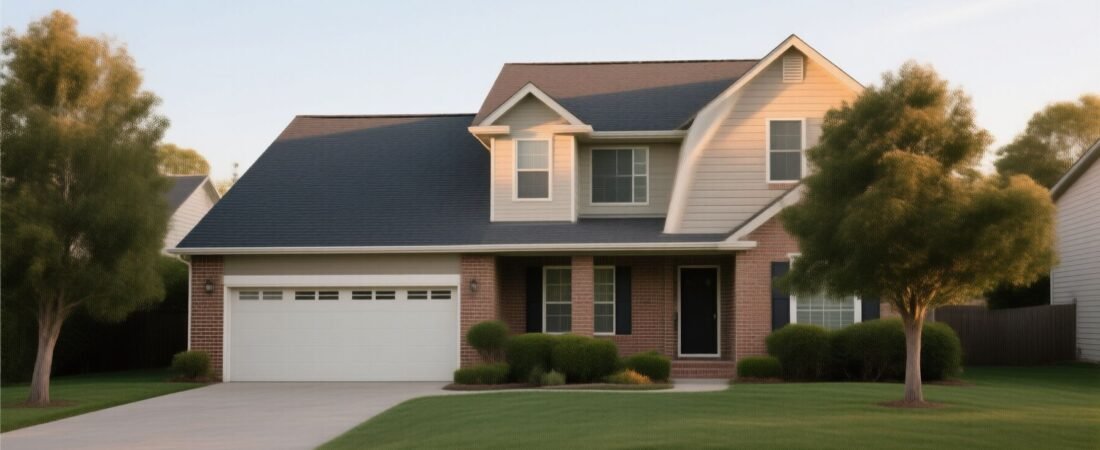
The image offers a close-up look at the kind of home details that can feed into a premium.
Which Features of Your Home and Location Affect the Premium?
Insurers start with the house itself, because what it would cost to repair or rebuild is a large part of what they’re agreeing to pay for. Rebuild cost means what it would take to reconstruct the home using today’s labor and materials, and it can differ a lot from what you paid or what the home would sell for. Location adds a second layer, since weather, wildfire exposure, crime and access to fire protection vary from place to place.
- Roof age, condition and material: roofs are a frequent source of weather-related claims, so insurers often look at them closely.
- Construction type: a wood-frame home and a masonry home may hold up differently to fire or high wind, and that can show up in pricing.
- Wiring, plumbing and heating systems: older systems may carry a higher chance of fire or water damage, which insurers may factor in.
- Size, layout and finishes: larger homes and higher-end materials typically cost more to rebuild, which can raise the price of the structure coverage.
- Where the home sits: local storm patterns, wildfire or hurricane exposure, neighborhood crime and distance to fire protection can all play a part.
Here’s a hypothetical example. Picture two similar-looking houses on one street, where one has a recently replaced roof and updated plumbing and the other has an aging roof and original pipes. An insurer may price them differently, not because either owner is careless, but because older systems can carry a higher chance of a claim. How much weight any single factor gets depends on the insurer and on your state.
How Do Coverage Limits and Deductibles Change What You Pay?
The choices you make on the policy can move the price as much as the house does. A standard homeowners policy typically includes dwelling coverage for the structure, other-structures coverage for things like a detached garage or fence, personal property coverage for your belongings, liability coverage if you’re held responsible for someone else’s injury or property damage, and loss-of-use coverage for extra living costs if a covered loss makes your home unlivable. Higher limits generally mean a higher premium, but limits set too low can leave you covering the gap after a large loss.
Your deductible, which is the amount you pay yourself before the insurer pays on a covered claim, pulls the other way. A higher deductible often lowers the premium, but it also means more comes out of your pocket when something happens. How your belongings and roof are valued matters too: replacement cost typically pays toward replacing items with comparable new ones, while actual cash value typically subtracts for age and wear, and policies differ on which they use. Your declarations page, the summary page that lists your limits, deductible and premium, shows what you have now.
| Situation | Typically covered? | What to check in your policy |
|---|---|---|
| Rising flood water damages the house | Typically excluded from standard homeowners policies | Whether a separate flood policy is in place or available, and what it would cover |
| Sudden wind or hail damage to the roof | Often covered, though the deductible or roof valuation may differ from other claims | Whether wind or hail has its own deductible, and whether roofs are paid at replacement cost or actual cash value |
| A roof that has slowly worn out with age | Typically excluded as wear and tear | The exclusions section, especially wording about gradual deterioration and maintenance |
Do Your Claims History and Personal Details Affect Homeowners Insurance Rates?
They often do. Insurers commonly look at your past claims, and sometimes at the claim history tied to the property itself, because earlier losses may hint at how likely future ones are.
Other details can matter as well. Some insurers ask about dogs when setting liability terms, since a bite injury is one way a liability claim can begin, and our article on Does Renters Insurance Cover Pets and Dogs? explains the renter side of that question. The reasoning about liability overlaps in places, but homeowners policies have their own wording, so your policy and insurer have the final say.
How Can You Lower Your Premium Without Leaving Gaps?
The goal is to trim cost without trimming protection you’d regret losing after a claim. Also keep in mind that the right policy type depends on how you use the home, and Homeowners Insurance for Rental Property and Landlords covers what changes if you rent it out.
- Ask your insurer or agent which discounts exist. Common ones involve bundling policies, safety devices or home updates, though what’s offered depends on the insurer and your state.
- Compare quotes from more than one insurer using the same limits, deductible and valuation method, so you’re comparing like with like.
- Keep up with roof, plumbing and electrical maintenance, which may reduce the chance of a claim and can matter when the insurer reviews your home.
- Check your dwelling limit against current rebuild costs rather than market value, and tell your insurer about major renovations so the policy reflects them.
Insurers typically price for sudden and accidental events, like a pipe bursting or a tree falling, rather than gradual deterioration, which is why maintenance is generally the owner’s job and why wear and tear is commonly excluded. A cheaper quote can also come with narrower terms, such as a separate wind or hail deductible or roof payment based on actual cash value, so read the details before switching. Answer application questions accurately too, because incorrect information can create problems when you file a claim later.
Pro-Tip: Keep a copy of your current declarations page and full policy, then photograph or video the home, including the roof, major systems and big-ticket belongings, and save renovation receipts. That record helps you compare quotes accurately, and an honest record of the home’s real condition supports any claim you may need to make later.
When to Talk to Your Insurer, Agent or an Attorney:
- Your premium jumped at renewal and the notice doesn’t explain why. Your insurer or agent can often tell you which factors changed.
- You’ve finished a major renovation or added a detached structure and aren’t sure your limits reflect it.
- You’re unsure whether your dwelling limit would be enough to rebuild after a total loss, where the home is destroyed or too damaged to repair.
- You received a denial, cancellation or non-renewal letter you disagree with. Start by asking the insurer for its reasons in writing, and know that a licensed attorney in your state can advise you on your options.
- Someone was injured on your property or a liability claim has been made against you, since your policy’s notice requirements and wording will matter.
Before you compare a single quote, find your declarations page and write down your deductible, then locate the exclusions section of the policy. Mark any wording about wind, hail, water or roof age that you don’t fully understand, and bring those questions to your agent or insurer so every quote you see can be read against the same baseline.
Frequently Asked Questions
How to calculate homeowners insurance for my house?
Insurers typically start with the cost to rebuild your home, then adjust the price for your location, coverage limits, deductible, and other risk factors. There is usually no single formula that works for every company, so the most reliable way to get a real number is to request quotes. Your final premium depends on your policy and state.
What factors affect homeowners insurance rates the most?
Rebuilding cost, location, the age and condition of the home, and the coverage limits you choose often have a large effect on your premium. Insurers may also consider things like the roof, construction materials, and nearby risks such as storms or wildfires. How much each factor counts usually depends on the insurer and your state.
Does my credit score affect my homeowners insurance premium?
In many places, insurers use a credit-based insurance score as one of several pricing factors. Whether this is allowed, and how much weight it carries, depends on your state and the insurer. Your state insurance department can tell you what rules apply where you live.
How does my deductible change my homeowners insurance cost?
A higher deductible typically lowers your premium because you agree to pay more out of pocket when you file a claim. A lower deductible usually raises the premium. It’s worth choosing a deductible you could comfortably afford to pay, and your insurer can show you how different options change your quote.
How can I lower my homeowners insurance premium?
Common options include comparing quotes from several insurers, bundling policies, raising your deductible, and making home improvements like a newer roof or added safety devices. Discounts often vary by insurer and state. Review your own policy or contact your insurer to ask which discounts you may qualify for.
Where to Verify This for Your Own Situation
- Your own policy: the declarations page, the coverage forms and any endorsements are what actually decide a claim.
- Your insurer or licensed agent: ask for the answer in writing if it affects a major decision.
- Your state insurance department: the regulator for your state, through the National Association of Insurance Commissioners (NAIC) website.
- General consumer explanations: the Insurance Information Institute.
- Flood coverage: the National Flood Insurance Program (a separate policy from standard home or renters insurance).
Disclaimer: This article is general educational information, not insurance, legal, tax or financial advice, and it is not a statement about what your own policy covers or will pay. Coverage depends on your specific policy wording, endorsements, limits and deductibles, your insurer and your state, and on the facts and cause of each loss. Insurers decide claims based on your policy, so read it and confirm details with your insurer or a licensed insurance agent before you rely on anything here or file a claim. Covered or Excluded is not an insurance company, agent or broker, and we cannot review your policy or your claim. If you need legal advice about a denied claim, speak with a licensed attorney in your state. In an emergency, contact emergency services first.