
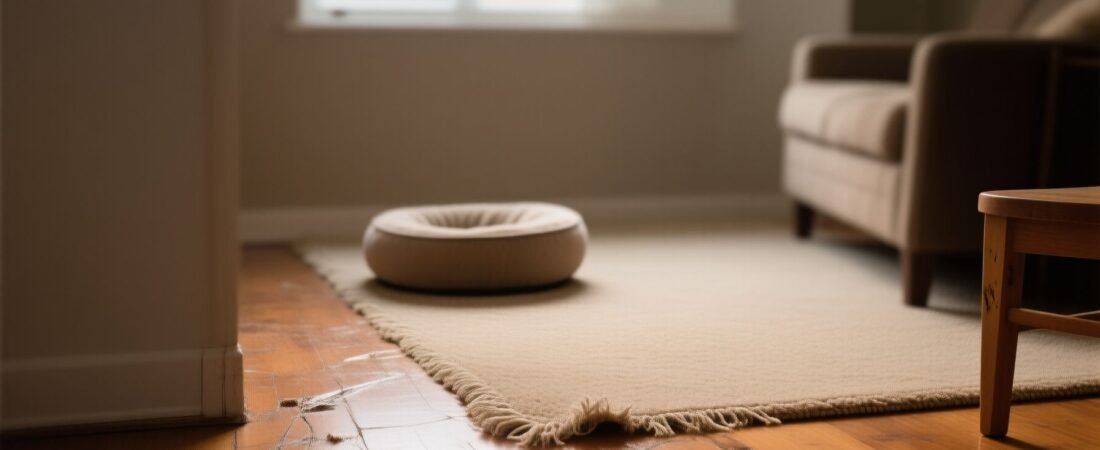
Quick Answer — Usually excluded: Pet damage to carpet and floors is typically not covered by renters insurance, because the flooring usually belongs to the landlord and slow pet damage is commonly treated as wear, neglect or animal-related damage. The exact wording depends on your policy, any endorsements and your state.
The scratches by the front door started small, but now the carpet beside the couch has a stain you’d rather not look at, and your lease is almost up. Does renters insurance cover pet damage to carpet? Usually not, and this guide explains why, what might still be covered, and what to do next.
Does Renters Insurance Cover Pet Damage to Carpet and Floors?
In most cases, no. A renters policy is built around three things: your own belongings (called personal property coverage), your legal responsibility if you hurt someone or damage their property (liability coverage), and extra living costs if a covered loss makes your home unlivable (loss of use). Repairing the building isn’t on that list, and the carpet and flooring that came with your unit typically belong to the landlord, whose own policy is meant to deal with the structure.
Even where flooring is covered as part of a building, pet damage is commonly left out. Scratches, chewing, stains and odors usually build up over time, and insurers tend to treat that kind of damage as ordinary upkeep or as damage caused by animals you keep, both of which many policies exclude. Exact wording varies by insurer, by endorsement (an add-on that changes your coverage) and by state, so what applies to you depends on your own policy.
Why Do Insurers Exclude Pet Damage and Gradual Wear?
Insurance is designed for losses that are sudden and accidental, meaning they happen unexpectedly and aren’t something you could see coming, like a fire or a pipe that bursts overnight. Gradual damage is different because it develops slowly, often from something happening day after day. Insurers typically exclude it because it behaves more like a maintenance cost than a rare risk, and sharing rare risks across many policyholders is what keeps insurance affordable.
Owning instead of renting changes who the floor belongs to, since homeowners policies typically cover the structure of the home, but pet damage is often still excluded under the same wear, neglect and animal wording. Our guide to What Does Homeowners Insurance Cover? (And What It Doesn’t) shows how that structure coverage is usually organized. Here are common examples of what policies often exclude or limit:
- Claw scratches on hardwood, laminate or vinyl flooring, which usually build up over time rather than happening in one event.
- Urine or accident stains and lingering odors in carpet and padding (the cushioning layer under the carpet), which are often treated as neglect or gradual damage.
- Chewed baseboards, door frames, stair edges or carpet corners.
- Damage the policy describes as wear and tear or deterioration, wording that often covers the slow aging of materials.
- Damage caused by animals you own or keep, in policies that include specific animal wording.
- Routine cleaning, including professional carpet cleaning, since that’s usually viewed as upkeep rather than a loss.
Is My Own Rug, Couch or Furniture Covered If My Pet Damages It?
Personal property coverage pays for your belongings when they’re damaged by a cause of loss the policy covers. Some policies are “named perils,” meaning they list the specific causes that are covered, such as fire or theft, while others are “open perils,” meaning they cover most causes unless an exclusion applies. A pet chewing a couch or scratching a table usually isn’t a listed cause, and it often runs into exclusions for wear, damage by animals or similar wording, though this depends on your policy.
The cause of the damage matters more than the item itself. A sudden covered event that damages your belongings is a different situation from slow pet wear on a sofa, and our article on Does Renters Insurance Cover Theft, Burglary and Robbery? shows how covered causes work on the belongings side. Even when a claim fits, you’ll typically need to compare the loss to your deductible (the amount you pay before the insurer pays) and your coverage limit (the most the policy will pay for that kind of loss).
Will Liability Coverage Pay My Landlord for Damage My Pet Caused?
Liability coverage typically helps when you’re legally responsible for injuring someone or damaging their property, so it’s a fair question to ask. The catch is that many policies carve out property you rent, occupy or have in your care, and your landlord’s floors are exactly that. Some policies include limited protection for certain tenant-caused events, often tied to specific causes, so check how your wording treats damage to the rental itself.
Then there’s your security deposit, the money you paid the landlord up front to cover unpaid rent or damage. Landlords often deduct for damage that goes beyond normal wear, and renters insurance typically doesn’t reimburse those deductions. What counts as normal wear, how deposits are handled and any pet fees or pet deposits depend on your lease and your state.
| Situation | Typically covered? | What to check in your policy |
|---|---|---|
| Your dog scratches the landlord’s hardwood floor over several months | Typically not covered | Exclusions for wear and tear, animals and property you rent, plus the pet and damage clauses in your lease |
| Your cat chews the arm of your own sofa | Typically not covered | Whether your policy lists covered causes or uses exclusions, and any wording about animals, wear or deterioration |
| Your dog injures a visitor (a different kind of claim) | Sometimes covered under liability, depending on the policy | Animal or breed restrictions, your liability limit, medical payments wording and any notice requirements |
Frequently Asked Questions
Does renters insurance cover pet damage to carpet?
Typically, no. Renters insurance usually covers your belongings and your liability to others, and damage caused by your own pet to the carpet is often treated as wear, tear, or neglect rather than a covered event. What your policy covers depends on its wording and your state, so check your own policy or contact your insurer to confirm.
Will renters insurance pay my landlord if my dog ruins the floors?
It depends on your policy and state. Liability coverage often applies to accidental damage you cause to others’ property, but many policies exclude damage caused by pets or damage that is considered intentional or the result of neglect. Ask your insurer how it would treat a claim for pet damage to a rental unit.
Is pet damage to carpet taken out of my security deposit instead?
Often, yes. Landlords commonly use the security deposit to cover damage beyond normal wear and tear, which can include pet stains, scratches, or odors. How deposits can be used depends on your lease and state rules, so review your lease and local tenant guidelines.
Does renters insurance cover pet urine stains or scratches on hardwood floors?
Usually not. Urine stains, odors, and scratches from pets are often considered gradual damage or maintenance issues, which many policies typically exclude. Coverage can vary by insurer, so your policy documents are the best place to see how these situations are handled.
What can I do if my insurer denies a claim for pet damage?
Start by asking your insurer for the denial in writing and reviewing the exclusions listed in your policy. If you believe the decision was wrong, you can often file an appeal with the insurer. For a dispute, your state insurance department or a licensed attorney can help explain your options.
Where to Verify This for Your Own Situation
- Your own policy: the declarations page, the coverage forms and any endorsements are what actually decide a claim.
- Your insurer or licensed agent: ask for the answer in writing if it affects a major decision.
- Your state insurance department: the regulator for your state, through the National Association of Insurance Commissioners (NAIC) website.
- General consumer explanations: the Insurance Information Institute.
- Flood coverage: the National Flood Insurance Program (a separate policy from standard home or renters insurance).
Disclaimer: This article is general educational information, not insurance, legal, tax or financial advice, and it is not a statement about what your own policy covers or will pay. Coverage depends on your specific policy wording, endorsements, limits and deductibles, your insurer and your state, and on the facts and cause of each loss. Insurers decide claims based on your policy, so read it and confirm details with your insurer or a licensed insurance agent before you rely on anything here or file a claim. Covered or Excluded is not an insurance company, agent or broker, and we cannot review your policy or your claim. If you need legal advice about a denied claim, speak with a licensed attorney in your state. In an emergency, contact emergency services first.